
GLP-1 Wound Healing: What the Evidence Actually Shows
GLP-1 wound healing is one of the most consequential questions in medicine right now, and almost nobody is answering it for the patient standing in the middle of it: the person on semaglutide or tirzepatide who also has a wound that will not close.
I have spent nearly a decade running an advanced wound care center and the last several years managing metabolic and weight-loss therapy in a concierge practice. I see both halves of this patient. The honest answer is not the one either camp wants. GLP-1 medications appear to improve the environment a wound heals in — and, managed carelessly, they can starve that same wound of the raw material it needs to close.
The short answer
Current evidence suggests that people with diabetes who take GLP-1 receptor agonists have better lower-extremity outcomes than those who don’t — fewer amputations, better survival after a foot ulcer. But none of that evidence comes from a trial designed to test wound healing, and none of it accounts for what aggressive, unsupervised weight loss does to protein status, muscle mass, and the caloric surplus a wound actually requires.
In other words: on GLP-1 wound healing, the drug is probably helping. The way it is often used may not be.
Why blood sugar decides how fast a wound closes
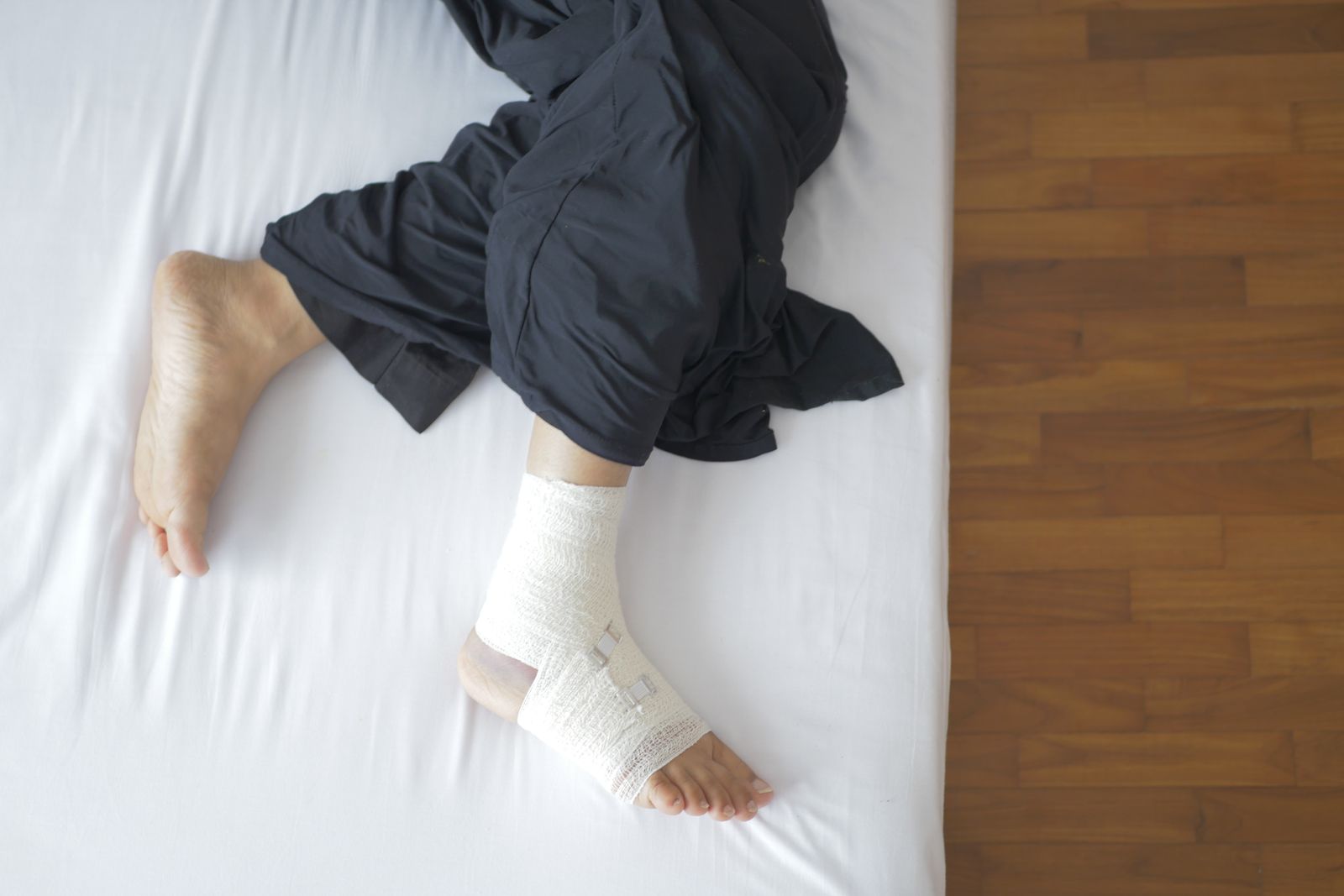
Before we talk about the medication, it is worth understanding why metabolic health sits underneath every chronic wound I treat.
Persistently elevated glucose damages healing at nearly every stage:
- Immune defense falters. High glucose impairs neutrophil chemotaxis and phagocytosis — the white blood cells that arrive first to clear bacteria move slower and kill less effectively. This is a large part of why diabetic wounds infect so readily.
- Collagen becomes brittle. Excess glucose drives the formation of advanced glycation end products, which cross-link collagen abnormally. The new tissue that forms is weaker and less elastic than it should be.
- New blood vessels don’t grow. Angiogenesis — the sprouting of new capillaries into the wound bed — is blunted in hyperglycemia. Without new vessels, oxygen and nutrients never reach the tissue trying to rebuild.
- The wound stays stuck in inflammation. Healing is supposed to move from inflammation to proliferation to remodeling. Diabetic wounds tend to park in the inflammatory phase indefinitely.
- Protective sensation disappears. Peripheral neuropathy means the patient never feels the pressure or friction causing the damage in the first place. This is why offloading is the single most underestimated step in foot wound care.
Add peripheral arterial disease on top and you have the full picture I described in why small diabetic foot wounds become big problems. Metabolic control is not adjacent to wound care. It is wound care.
What the GLP-1 wound healing evidence actually shows
The last two years have produced a genuinely striking body of observational data.
A large cohort study of patients with peripheral arterial disease, published in Diabetes Research and Clinical Practice in 2025, found GLP-1 receptor agonist therapy associated with roughly a 20% lower risk of lower-extremity amputation, with semaglutide specifically associated with about a 24% reduction in major amputation risk.
A 2025 analysis drawn from the TriNetX US research network compared 6,329 semaglutide users against more than 118,000 non-users across dozens of health systems and reported significantly lower relative risk of wound complications and amputation.
A 2026 national French analysis of more than 130,000 patients with a new diabetic foot ulcer found GLP-1 use independently associated with meaningfully lower one-year mortality — including among patients who went on to require amputation. A separate 2026 study extended similar signals to venous leg ulcers, reporting better healing and fewer wound infections among GLP-1 users.
The one piece of randomized evidence comes from the LEADER trial, where liraglutide-treated patients showed fewer diabetic-foot-related amputations than placebo across a population of more than 9,000 people with type 2 diabetes — though this was a secondary observation, not the trial’s purpose.
Now the caveats, because they matter
Nearly all of this is observational. Observational data tells you two things travel together; it does not tell you one caused the other. People who are prescribed and stay on GLP-1 medications tend to be more engaged in their care, more likely to attend appointments, and often better insured — all of which independently predict better wound outcomes.
No GLP-1 medication is FDA-approved for wound healing. There is no randomized trial testing whether starting one closes an ulcer faster. Any clinician who tells you otherwise is ahead of the evidence, and you should discount the rest of what they say accordingly.
The part nobody mentions: rapid weight loss can work against your wound
Here is where my two specialties collide, and where the GLP-1 wound healing conversation usually goes wrong. Most patients are being poorly served on exactly this point.
A healing wound is a construction project. It requires substrate — protein for collagen synthesis, calories to fuel the metabolic work, plus zinc, vitamin C, and adequate hydration. The 2019 EPUAP/NPIAP international guidelines recommend 1.25 to 2.0 grams of protein per kilogram of body weight per day and 30 to 35 kilocalories per kilogram per day for adults with a wound who are malnourished or at risk of malnutrition. That is a substantial intake. For a 180-pound adult, the protein target alone lands around 100 to 160 grams daily.
GLP-1 therapy does the opposite by design. It suppresses appetite, slows gastric emptying, and produces a sustained caloric deficit. And a meaningful share of the weight lost is not fat. Analysis published in Metabolites in 2026 reports that roughly one quarter of total weight lost on GLP-1-based therapy is lean tissue, with real-world body composition data suggesting the fat-free share can run as high as a third.
Lean tissue is not decoration. Skeletal muscle is the body’s amino acid reservoir — the pool it draws from to build collagen when tissue is damaged. Depleting that reservoir while simultaneously running a caloric deficit while asking the body to close a wound is a physiologic contradiction.
Researchers working on lean mass preservation recommend 1.2 to 1.5 g/kg/day of protein during active GLP-1 weight loss, distributed across meals rather than concentrated at dinner — a common pattern among GLP-1 users, who often eat little until evening. For a patient who also has an open wound, I treat the higher end of the wound-healing range as the floor, not the target.
This is the practical takeaway: the medication may improve your metabolic environment while your eating pattern quietly starves your wound. Both things can be true at once, and only one of them is being monitored in most practices.
How GLP-1 wound healing should actually be managed
If you have an active wound and you are on — or considering — a GLP-1, this is what coordinated care looks like:
- Baseline labs before starting, not after. A1c, comprehensive metabolic panel, CBC, albumin or prealbumin, vitamin D, and zinc. Both albumin and prealbumin are depressed by inflammation as well as by malnutrition, so they are interpreted alongside diet history and weight trend rather than read in isolation.
- A protein floor written into the plan. Not “eat more protein.” An actual daily gram target based on body weight, split across at least three feedings, with a supplement strategy for the days appetite suppression wins.
- Slower titration while a wound is open. Aggressive dose escalation maximizes weight loss and appetite suppression. That is the wrong priority while tissue is trying to rebuild.
- Resistance training, not just walking. Loading muscle is the most effective non-pharmacologic defense against lean mass loss. It has to be adapted around the wound — which is a conversation, not a handout.
- Serial wound measurement. A wound that has not reduced its surface area by roughly 40–50% at four weeks is not on a healing trajectory and needs the plan changed. I cover the warning signs in detail in signs a wound is not healing properly.
- Someone owning the whole picture. Your endocrinologist is watching your A1c. Your surgeon is watching the incision. Frequently, no one is watching the interaction. That gap is exactly where limb salvage succeeds or fails.
Questions worth asking your clinician
- What is my daily protein target in grams, and how did you calculate it?
- Are we measuring my wound at every visit, and is it on trajectory?
- Should we hold my dose escalation until this wound closes?
- Have we checked prealbumin, vitamin D, and zinc?
- Who is coordinating between my wound care and my metabolic care?
If the answer to the last question is “nobody,” that is the problem worth fixing first.
The bottom line
The honest summary on GLP-1 wound healing: these medications are one of the most significant metabolic advances of my career, and the emerging data on limb outcomes is encouraging. But they are not a wound therapy, and treating them as one is a mistake in the other direction.
The patients who do best are the ones whose glucose control, nutrition, offloading, and wound care are managed as a single problem rather than four separate appointments. That is the entire premise of how I practice — and it applies whether the wound is a diabetic foot ulcer or a surgical incision healing at home.
Cindy Wu, DNP, FNP-C, CWCN is a doctorally prepared family nurse practitioner and Certified Wound Care Nurse. She has led an advanced wound care center in the San Francisco Bay Area since 2017 and founded Wound Concierge to deliver coordinated wound, metabolic, and longevity care.
This article is for educational purposes and does not constitute medical advice or establish a clinician-patient relationship. GLP-1 receptor agonists are not FDA-approved for wound healing. Do not start, stop, or change any medication without consulting your own clinician.