
Offloading: The Overlooked Step That Decides Whether a Foot Wound Heals
There’s a hard truth in wound care that surprises almost every patient: the dressing on a foot ulcer matters less than what happens between dressing changes. A wound on the bottom of the foot takes the full force of your body weight with every single step — thousands of times a day. No dressing, ointment, or medication can outwork that. This is why offloading foot wounds — relieving pressure from a healing wound — is considered the make-or-break step in treating foot ulcers, and why wounds that “just won’t heal” so often turn out to be wounds that were never properly offloaded.
International guidance is unambiguous on this point: the IWGDF international guidelines on the diabetic foot rank pressure relief among the highest-priority interventions for healing a plantar ulcer. Everything else in the plan works better once offloading foot wounds is handled properly.
Why pressure is the healing killer
Healing tissue is fragile. New skin cells and blood vessels form a delicate scaffold that rebuilds a little more each day — and repeated pressure crushes that scaffold faster than the body can rebuild it. For people with diabetic neuropathy, the problem compounds: without pain to warn them, patients walk normally on a wound they can’t feel, undoing each day what the previous night repaired. (This is one reason diabetic foot ulcers stall so often — we cover the full picture in our guide to diabetic foot ulcers.)
The math is unforgiving. A foot ulcer that is consistently offloaded can close in weeks. The same ulcer, walked on daily, can stay open for months — accumulating infection risk the entire time, and in the worst cases becoming the wound that threatens the limb itself (see our post on limb salvage).
What offloading foot wounds actually looks like
Offloading is not “resting more.” It’s a specific, prescribed strategy matched to the wound’s location and your daily life:
- Total contact casting. The gold standard for many plantar diabetic ulcers — a specialized cast that redistributes weight across the entire lower leg so the wound bears almost none of it. Its greatest strength is that it can’t be taken off, which is precisely why it works.
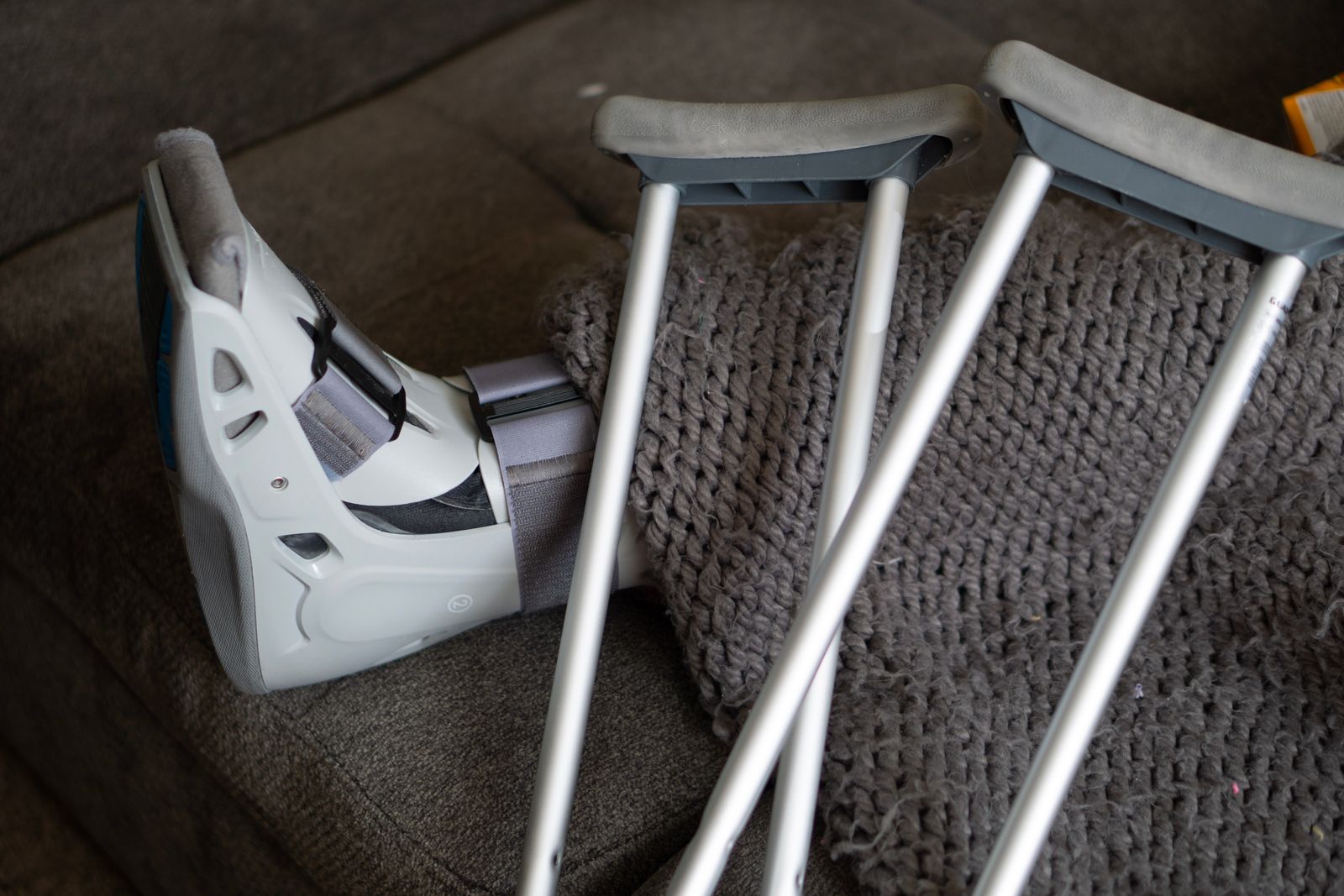
- Removable cast walkers and offloading boots. Nearly as effective as casting — but only when worn every waking hour. Research consistently shows the biggest failure point is simple: people take them off at home, and “just a few steps” to the kitchen adds up to thousands of loaded steps a week.
- Post-operative shoes and felted foam. For smaller or well-located wounds, a rigid-soled surgical shoe or felt padding shaped around the wound can deflect pressure away from the healing area.
- Mobility aids. Knee scooters, crutches, and wheelchairs have a real role for short healing pushes — especially for heel wounds, which are notoriously hard to offload with footwear alone.
The right choice depends on the wound, your balance and strength, your home layout, and your circulation — which is why offloading should be prescribed and fitted, not improvised.
The adherence problem no one talks about
Here’s the uncomfortable part: offloading fails at home far more often than it fails in principle. The device sits by the door while the patient “quickly” waters the garden barefoot. The boot comes off for sleep and doesn’t go back on for the 2 a.m. bathroom trip — which is exactly when an unprotected, numb foot finds the corner of the bed frame. Success is usually decided by a handful of small daily habits:
- Keep the offloading device within arm’s reach of the bed, and put it on before your feet touch the floor
- Plan your day to consolidate trips across the house — every step on the wound counts, even indoor ones
- Have a backup plan for bathing (a shower chair and a waterproof cover, fitted properly)
- Ask your wound specialist to check the fit at every visit — a rubbing device gets abandoned within days
Footwear: the prevention half of the story
Once a wound heals, the job isn’t done — it’s changed. Healed ulcer sites remain fragile for a year or more, and the same pressures that caused the first wound will cause the next one. Proper footwear is the long game: shoes fitted late in the day when feet are largest, with a deep toe box, no interior seams over pressure points, and cushioned, moisture-wicking socks without tight elastic bands. For people with diabetes or a history of ulcers, prescription diabetic shoes with custom insoles redistribute pressure before it can do damage. And the daily foot check remains non-negotiable — new pressure spots show up as redness or callus long before they open.
Offloading works better when someone comes to you
If offloading sounds burdensome, that’s because it is — and the burden is exactly why it fails. Getting to a clinic several times a week, on a foot you’re not supposed to walk on, is a contradiction built into traditional wound care. This is one of the core reasons Wound Concierge treats patients at home: we fit and adjust offloading devices where you actually live, spot the hazards in your real environment — the stairs, the bathroom route, the garden — and monitor the wound closely without asking you to walk on it to reach us.
If you or a loved one is battling a foot wound that won’t close, the problem may not be the dressing — it may be the pressure. We treat foot wounds at home across Atherton and the Bay Area — book an in-home visit. Call or text (650) 880-2121, seven days a week, or email info@woundconcierge.com.