
What Is Limb Salvage? How Coordinated Wound Care Helps Patients Avoid Amputation
Here is a statistic that deserves far more attention than it gets: roughly half of patients who undergo a major leg amputation do not survive five years — a survival rate worse than many cancers. And the majority of those amputations don’t begin with a dramatic event. They begin with a wound that didn’t heal.
For background on how diabetes leads to the foot complications behind most limb salvage cases, the National Institute of Diabetes and Digestive and Kidney Diseases maintains a clear patient-facing overview.
That’s why limb salvage — sometimes called limb preservation — has become one of the most important movements in modern wound care. The premise is simple: with the right team, the right diagnostics, and above all the right timing, most amputations are preventable. This post explains what a limb salvage approach actually involves, who needs it, and why acting early is the single biggest factor in keeping patients on their feet.
Limb salvage, defined: “toe and flow”
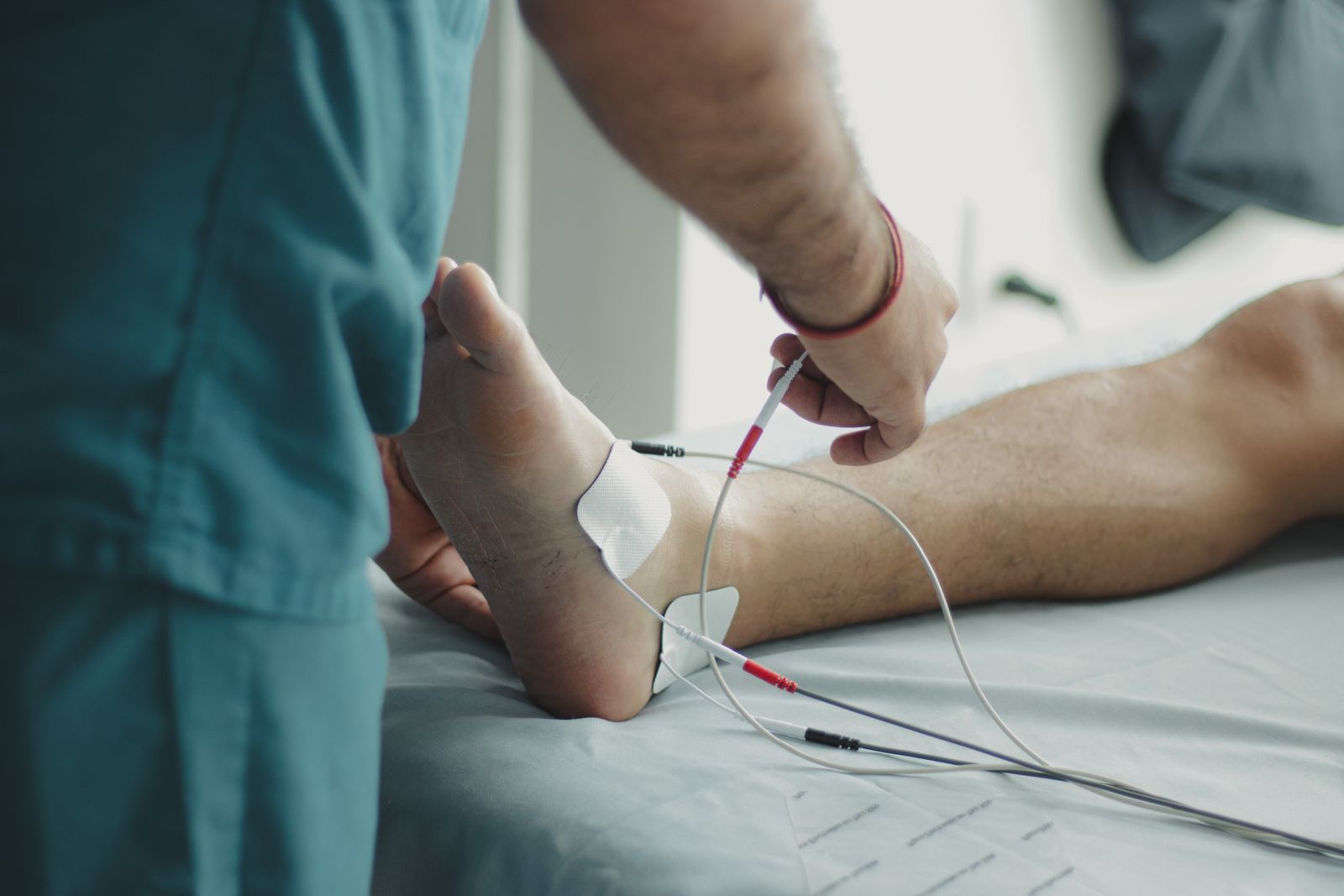
Limb salvage isn’t a single procedure. It’s a coordinated strategy that attacks the two problems behind almost every threatened limb at the same time:
- The wound itself (“toe”). Non-healing ulcers, infected tissue, and pressure damage need expert wound management — debridement, infection control, advanced dressings, and offloading to keep weight off the healing area.
- The circulation behind it (“flow”). A wound cannot heal without blood supply. Peripheral artery disease (PAD) quietly narrows the vessels that feed the foot and lower leg; in its severe form — chronic limb-threatening ischemia — even a small wound can spiral. Restoring blood flow, whether through minimally invasive endovascular procedures or surgery, is often the step that makes healing possible at all.
Programs that combine both disciplines — wound specialists working hand-in-hand with vascular surgeons — consistently report fewer major amputations than fragmented care, where a patient bounces between providers while the wound deteriorates.
Who is at risk of losing a limb
Most limb loss happens in a predictable population. You (or a family member) belong in a limb-preservation conversation if any of these apply:
- Diabetes with neuropathy — especially with a history of foot ulcers (see our guide to diabetic foot ulcers)
- A leg or foot wound that has not meaningfully improved in four weeks
- Known peripheral artery disease, or leg pain when walking that eases with rest
- Pain in the foot or toes at night or at rest — a classic sign of critically low blood flow
- A foot that is cold, pale, bluish, or has darkening skin near a wound
- Kidney disease or dialysis, which sharply raises wound-healing risk
- A previous amputation of a toe or part of the foot — the strongest predictor of another
The warning signs that demand action now
Some symptoms mean a limb is actively at risk. Seek specialist evaluation urgently — within days, not weeks — if you notice:
- A wound with spreading redness, foul odor, or exposed tendon or bone
- Black or dying tissue anywhere on the foot or toes
- Rest pain that forces you to dangle your leg off the bed for relief
- Sudden coldness, numbness, or color change in a foot
- Fever or chills alongside any lower-leg wound
Every one of these is a “today” problem. The window in which a limb can be saved is measured in days and weeks — and the data is blunt about what delay costs.
What a limb salvage plan actually looks like
For most patients, the path runs through a predictable sequence: a thorough circulation assessment (pulse exams, ankle-brachial index, imaging when needed); prompt revascularization if blood flow is inadequate; serial debridement so healthy tissue can rebuild; targeted infection control; strict offloading so the wound isn’t crushed with every step; and advanced wound therapies — specialized dressings, skin substitutes, negative pressure therapy — matched to the wound’s stage. Then comes the part most often skipped: close, frequent monitoring, because threatened limbs change fast and plans must change with them.
None of this works à la carte. A perfectly revascularized foot still ulcerates without offloading; the world’s best dressing fails over a blocked artery. The coordination is the treatment.
Limb preservation, brought to your door
This is precisely how Wound Concierge is built: doctoral nurse practitioner-led wound care with vascular surgeon oversight — the “toe” and the “flow” under one roof — delivered in your home. For patients who shouldn’t be walking on a threatened foot, or for whom every clinic trip is an ordeal, in-home care removes the most common reason limb-threatening wounds go undertreated: missed visits. We assess circulation concerns early, escalate to vascular intervention when it’s needed, and manage the wound intensively between milestones.
If you or someone you love has a lower-leg wound that isn’t healing — or has been told amputation may be on the horizon — a second look is always worth it. We bring coordinated limb-salvage care to Atherton and Bay Area families — book an in-home visit. Call or text (650) 880-2121, seven days a week, or email info@woundconcierge.com. When a limb is at risk, the most dangerous decision is waiting.